Mangrove is a film that is first instalment of a series of films from director Steve McQueen called Little Axe.
The Mangrove restaurant in Notting Hill in the 1960s, became much more than just a restaurant –it grew into an organising hub for the black community.
Its reputation went before it, as it attracted not just ordinary members of the community but a host of celebrities too, from rock pioneer Jimi Hendrix to left-wing actress Vanessa Redgrave.
And when the Black Panthers came onto the scene in the UK as an offshoot of the US organisation, it became a base for the militant group.
Saluting Frank Critchlow Altheia Jones-Le Cointe and the other heroes
Frank Critchlow was the owner of the restaurant and he was joined by the likes of Altheia Jones-LeCointe, Darcus Howe and Barbara Beese as key organisers.
This was all too much for the racist Met police, and in particular a certain PC Frank Pulley.
It was Pully who led the constant raids on the restaurant that eventually led to the framing of Mangrove Nine.
The framed activists defended themselves in court and powerfully exposed the racism of the British police at the time, and the film leaves you asking at the end, so what has changed as far as racist policing goes?
Eventually all the defendants were to walk free, acquitted of all the most serious charges.
This is a story whose telling is long overdue, and it couldn’t have come at a better time.
The choice of the title Small Axe for the series of films from McQueen exploring the African Caribbean Windrush generation’s experience in the UK, is based on a line from the Bob Marley and The Wailers song of the same name:
“So if you are the big tree, We are the small axe Ready to cut you down, (well sharp), To cut you down.”
????? We’re excited to have Roger Huddle joining our panel at 7pm this evening to discuss Rock Against Racism and Music and the Fight Against Racism with music from special guests. All welcome. Zoom details: 854 2960 2728 Passcode: 869873 ????? https://www.facebook.com/events/430142544667978/ Hosted by Oxford Love Music Hate Racism & Oxford Stand Up To Racism
This meeting coincides with the new film that tells the story of when Britain’s youth stood up against the far right… a film inspires us today – White Riot.
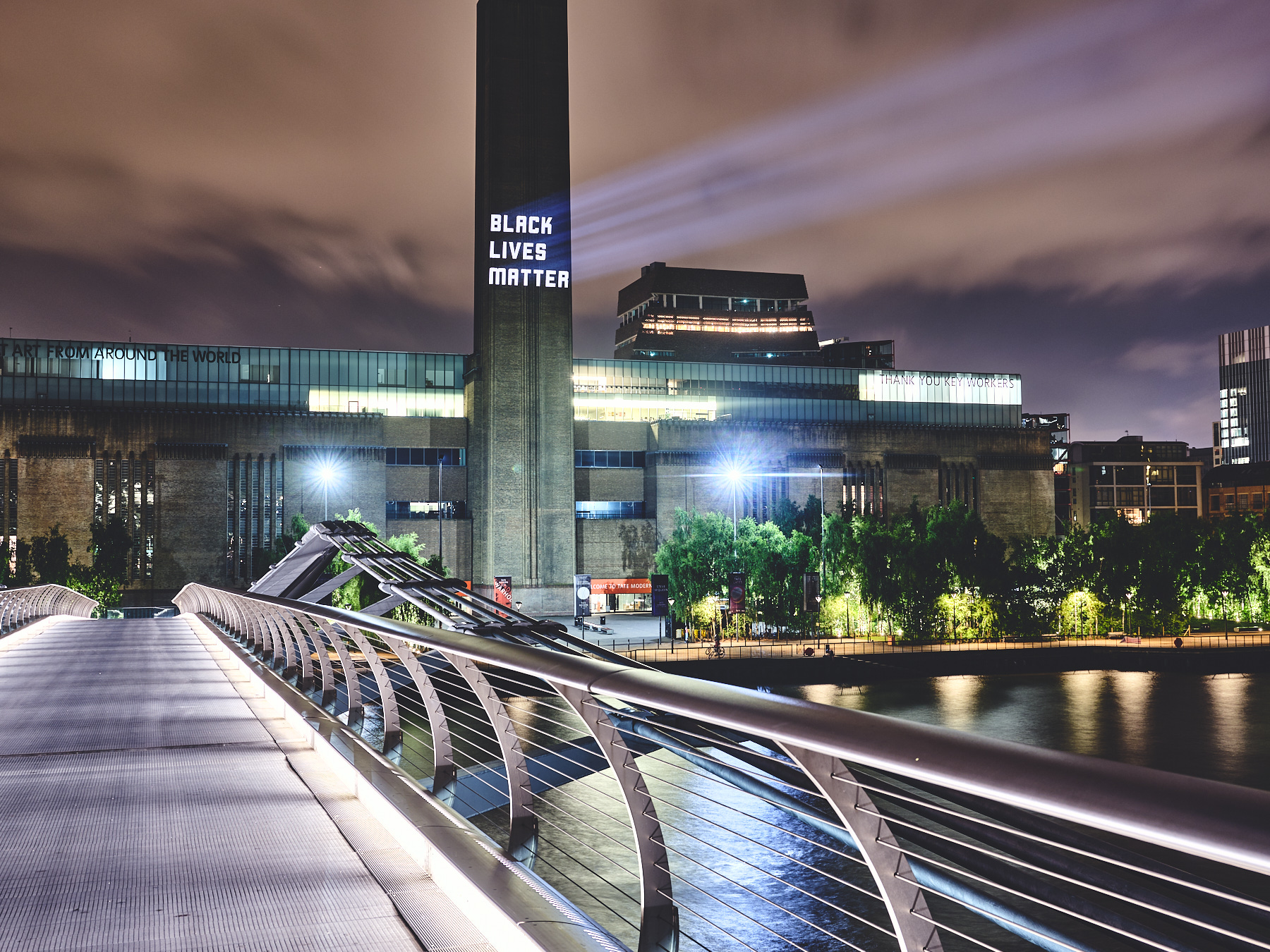
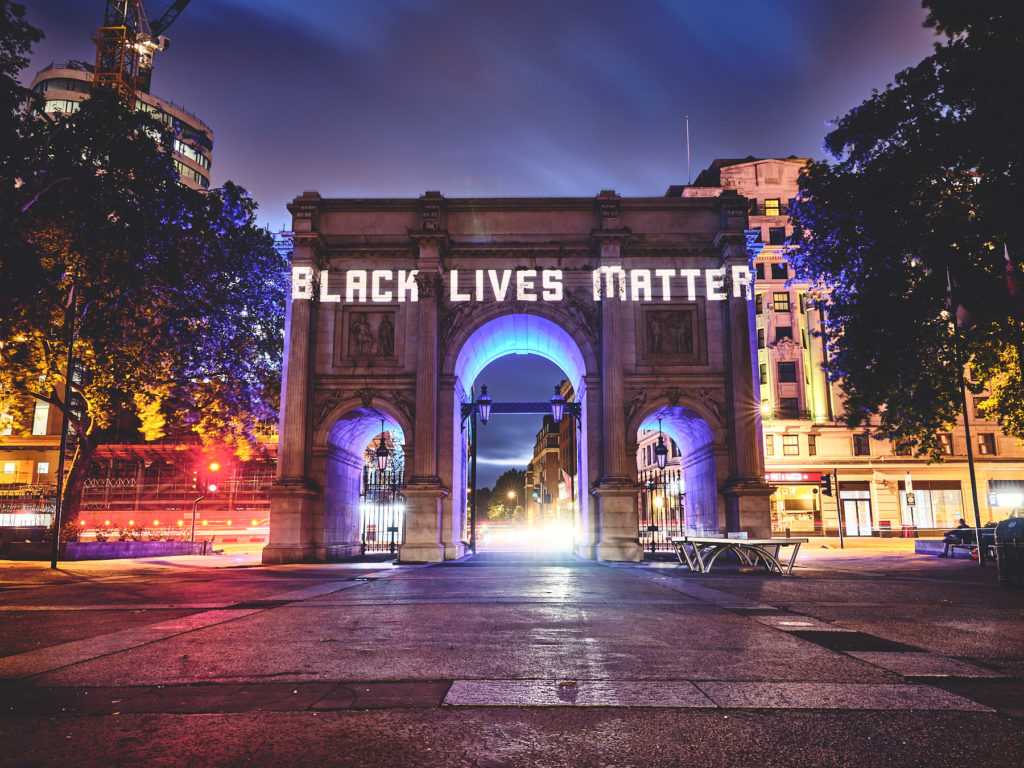
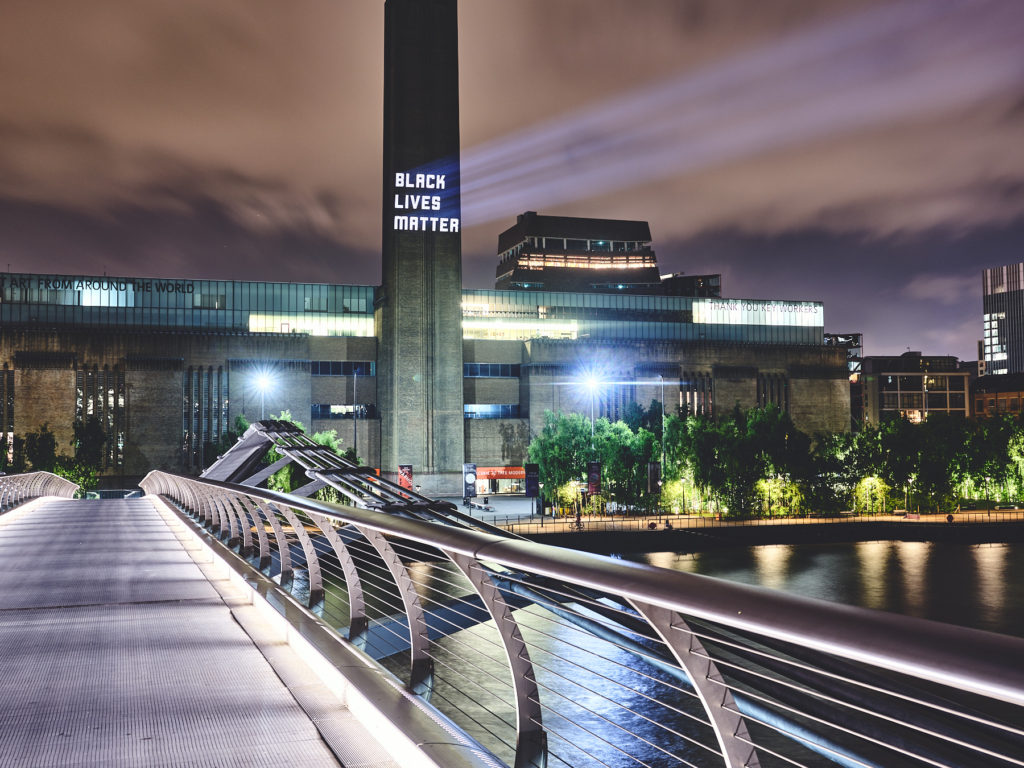
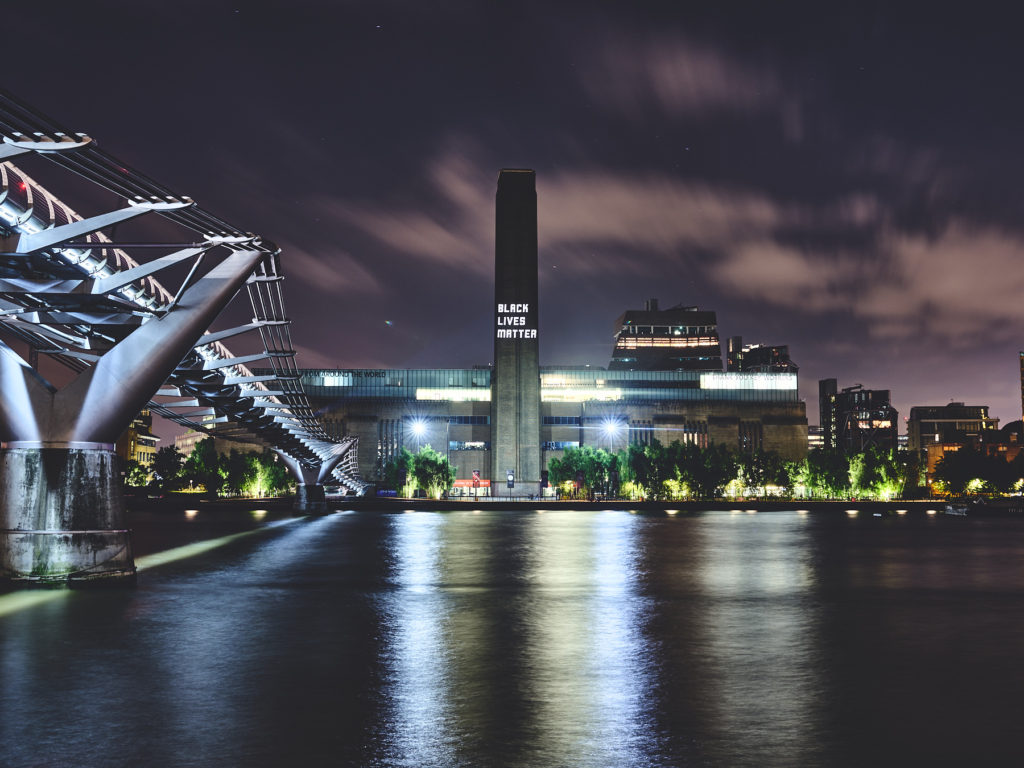
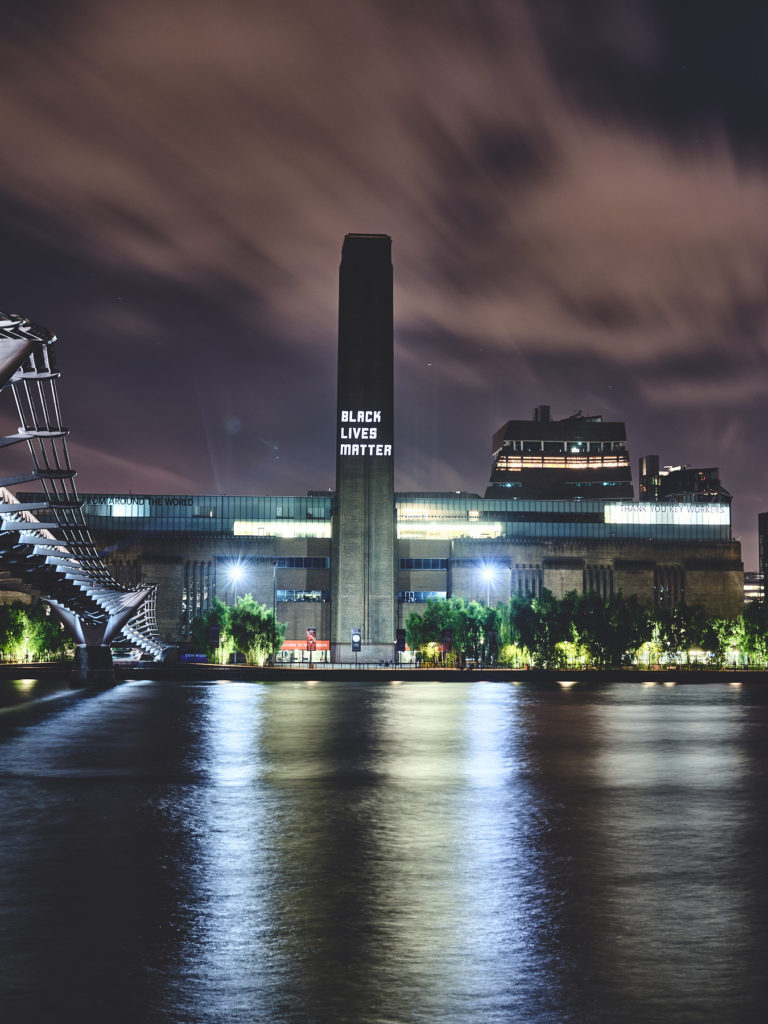
Following the controversy surrounding the long overdue toppling of Confederate statues in the US and those of slave traders here in the UK, the Black Lives Matter movement is charged with wanting to erase history.
No, we want to tell the true story of what happened in history and its legacy today.
What follows is an excerpt from the Tate Modern celebrating American sculptor Kara Walker’s Fons Americanus –
Delve deeper into 2019’s Hyundai Commission by Kara Walker
Allegory in art is when the subject of the artwork, or the various elements that form the composition, is used …
‘My work has always been a time machine looking backwards across decades and centuries to arrive at some understanding of my “place” in the contemporary moment.’ – Kara Walker
Kara Walker is an artist whose work explores ideas around identity, race, sexuality and violence. She works in a variety of mediums, including painting, print-making and installation. For Tate Modern’s 2019 Hyundai commission, Walker has created a large-scale public sculpture in the form of a four-tiered fountain. Fons Americanus questions how we remember history in our public monuments. At the same time, the work presents a narrative on the origins of the African diaspora.
Fons Americanus is inspired by the Victoria Memorial in front of Buckingham Palace, London. The memorial was designed in 1901 and unveiled in 1911 to honour the achievements of Queen Victoria who was the Queen of the United Kingdom of Great Britain and Ireland (1837–1901), as well as the Empress of India. Rather than a celebration of the British Empire, Walker’s fountain inverts the usual function of a memorial and questions narratives of power. Walker explores the interconnected histories of Africa, America and Europe. She uses water as a key theme, referring to the transatlantic slave trade and the ambitions, fates and tragedies of people from these three continents. Bringing together fact, fantasy and fiction, Fons Americanus stands as a representation of this narrative in the form of an allegory or fable.
The full title of the work is painted on the wall of the Turbine Hall. Written in Walker’s own words, the text encourages us to confront a history often misremembered in the UK. She presents the artwork as a ‘gift … to the heart of an Empire that redirected the fates of the world’. Walker has signed the work ‘Kara Walker, NTY’, or ‘Not Titled Yet’, in a play on British honours awards such as ‘OBE’ (Order of the British Empire).
WHY A MONUMENT?
The Victoria Memorial outside Buckingham Palace, London being unveiled for the first time in 1911
Walker’s choice to create Fons Americanus in the form of a public fountain is significant in the wake of recent student demonstrations to take down monuments that celebrate colonial histories in both the US and UK. Fons Americanus turns the celebration and honouring of monuments inside out. The monument asks uncomfortable questions by exploring a history of violence against Black people of Africa and its diaspora that is often unacknowledged.
As you enter the Turbine Hall, you first encounter a smaller monument of Shell Grotto. Taking the form of scalloped shells from art historical depictions of the Roman goddess Venus, Walker’s shell encases a weeping boy inside a well, almost completely submerged in water. His head floats just above the surface as if drowning or emerging from the depths, with pools of water running from his eyes.
Walker’s Shell Grotto connects to the ruins of a colonial fortress on Bunce Island in Sierra Leone. Bunce Island was one of many commercial forts where European slave traders and African merchants traded and captured men, women and children ready for them to be sold on the plantations of the New World or America.
Walker’s weeping boy and well question how these traumatic histories are now celebrated. The weeping boy bounces back from the depths of waters to interrogate what we choose to remember and what we forget. How can we see the monuments in our public spaces in a new light?
Nazis and Black Americans are equated as kindred self-loathing thieves, although they’re still sympathetic figures because they either regret their conduct (Griffin) or didn’t actively take what wasn’t theirs (Bergkamp). Given that he’s the son of a rabid Holocaust denier (and raving anti-Semite), Gibson’s participation in a film featuring a likeably remorseful guy with Nazi lineage hardly comes as a shock. But why Polish or Bosworth would want to involve themselves in such dreck remains baffling.
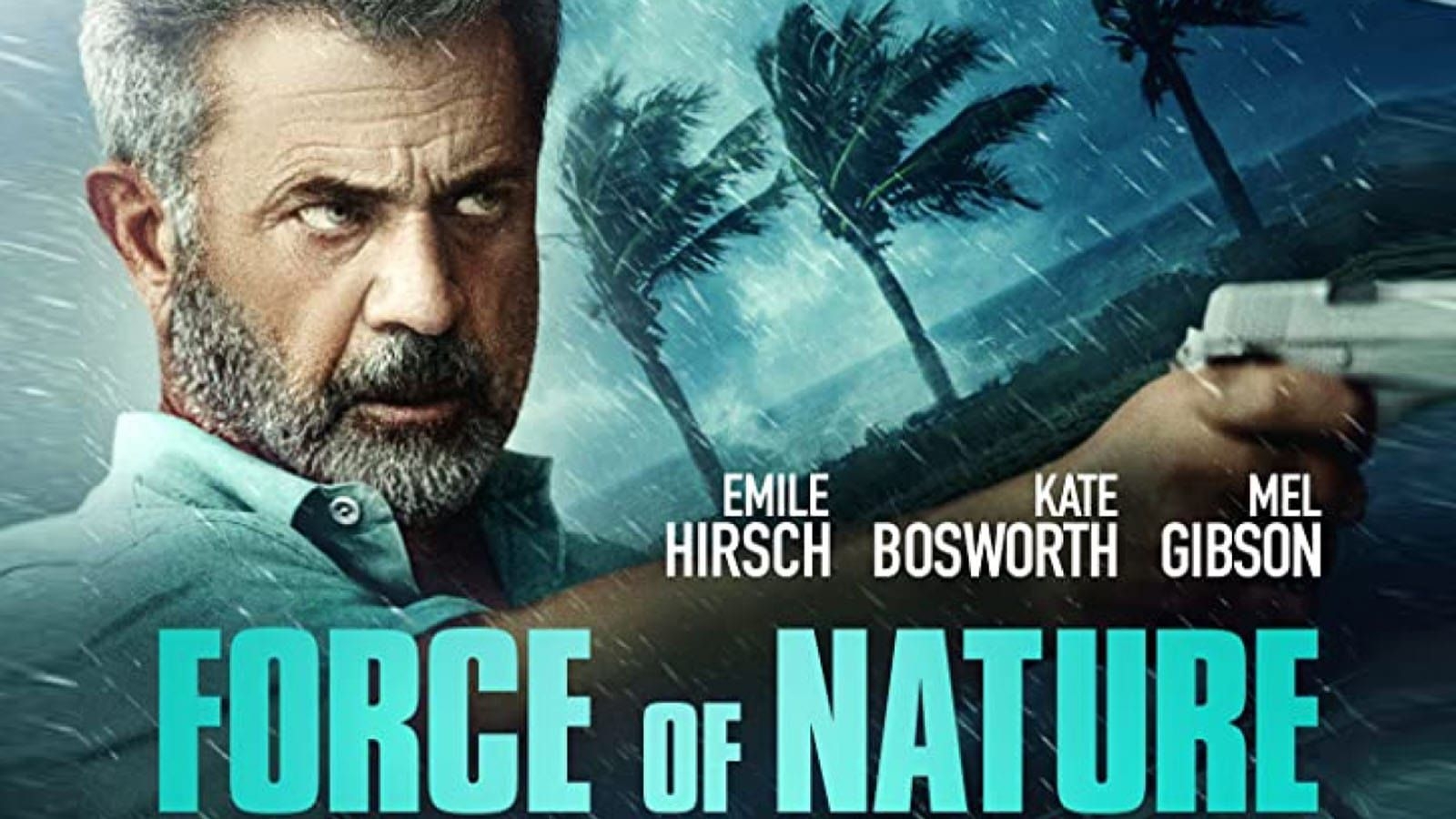
Unholy is the best way to describe sitting through 91 minutes of Mel Gibson and Emile Hirsch as rugged shoot-first, ask-questions-later cops gunning down Hispanic villains, and rescuing non-Puerto Rican men and women, set against a stormy background meant to recall a real-life disaster. Force of Nature is, in that regard, a throwback to a very familiar, very standard-issue sort of action affair in which police officers are excused their vicious trespasses because such hostility speaks to their venerable manliness, and light-skinned characters invariably come to the aid of helpless—and appreciative—darker-skinned folks. Even before the recent George Floyd protests and attendant calls for reform of intolerant institutions, that template was outdated and unpleasant. Today, though, it reeks of the very old-school unseemliness most Americans are ready to move past.
Daily Beast, June 26, 2020
Or check out the Digital Spy review, which highlightas the white saviour narrative against the backdrop of the hurricane in Puerto Rico :
Once the trailer was released on Monday (May 18), Force of Nature created an instant controversy as Puerto Ricans who experienced Hurricane Maria, as well as the struggles they’ve dealt with on the island, let their feelings known.
“Approximately 4,645 people died because of this hurricane. Approximately, because it was bad enough we don’t even have exact numbers,” one Twitter user wrote.
“People buried their dead in their backyards. People were without food, water, homes, electricity, for MONTHS. This is not an okay movie.”
Others criticised the movie for its ‘white saviour’ narrative with Gibson’s character “fighting a bunch of ‘bad guy’ ricans, also all the good guy cops are white”, while another called it “outright disrespectful”.
This website uses cookies to improve your experience. We'll assume you're ok with this, but you can opt-out if you wish. Cookie settingsACCEPT
Privacy & Cookies Policy
Privacy Overview
This website uses cookies to improve your experience while you navigate through the website. Out of these cookies, the cookies that are categorized as necessary are stored on your browser as they are essential for the working of basic functionalities of the website. We also use third-party cookies that help us analyze and understand how you use this website. These cookies will be stored in your browser only with your consent. You also have the option to opt-out of these cookies. But opting out of some of these cookies may have an effect on your browsing experience.
Necessary cookies are absolutely essential for the website to function properly. This category only includes cookies that ensures basic functionalities and security features of the website. These cookies do not store any personal information.
Any cookies that may not be particularly necessary for the website to function and is used specifically to collect user personal data via analytics, ads, other embedded contents are termed as non-necessary cookies. It is mandatory to procure user consent prior to running these cookies on your website.