
Covid victim George Ziwa needs your support for African funeral
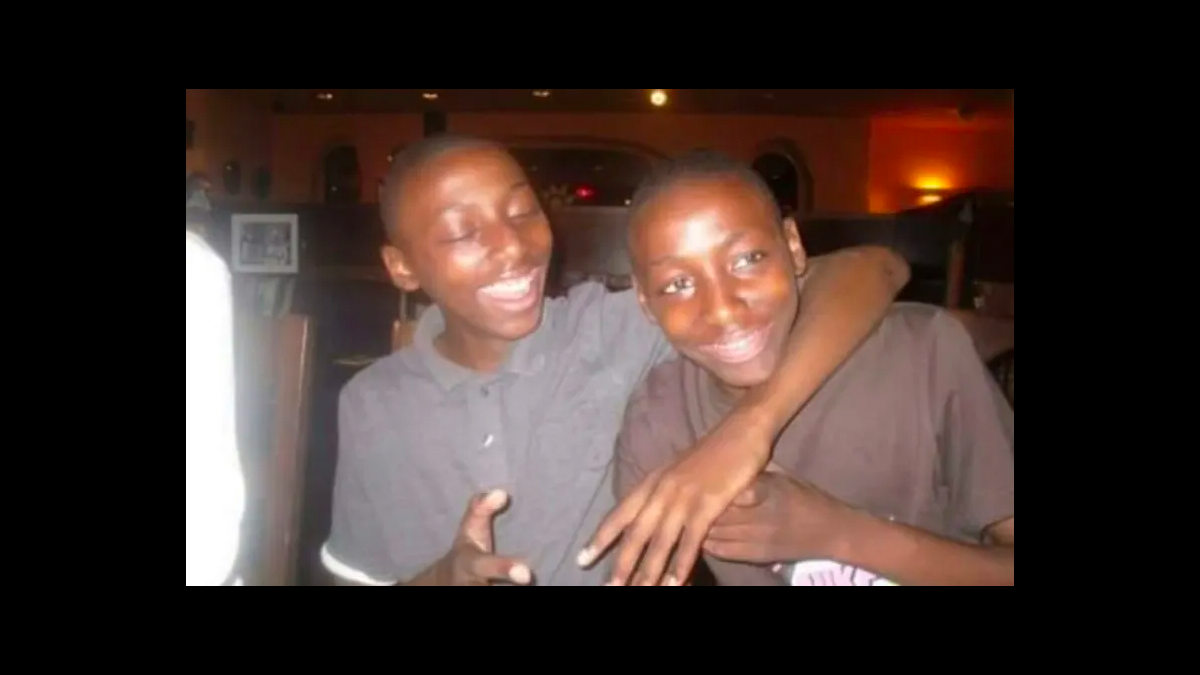
My name is Stephen Smith and sadly we lost our best friend Mr George Ziwa who was found totally decomposed in his flat in March.
Because of the Covid restrictions his body has only just been released by the coroner in High Wycombe, so we have only just set up his GoFundMe page so that his family in Uganda can give him the traditional African burial they have requested.
George Ziwa was a well known member of the Buckingham and Aylesbury community, he lived on the streets from 2012 until January 2019 when he moved into his flat.
Although George was responsible for the renovation of the local Red Cross Centre’s garden during 2017-2018 his lifestyle led to serious health complications.
George died on the 1 March 2020 and he was found at his home some weeks later.
I am appealing to everybody to help send George’s body home so his 80 year old mother can put him to rest under traditional African ceremony.
Please donate generously to the repatriation fund. Thank you:
More about George
George Ziwa was born on 28th June 1973 in Kampala, Uganda to Mrs Emma Namuli and the late George William Ziwa. He enjoyed a very close and dear relationship with his mother especially as he was her last born child. George went to school in Uganda and Kenya. He studied from S1 to S6 at Namilyango College, Uganda and he was a very active member of the Ngonian and the Namilyango College Old Boys Association (NACOBA). He later went to England where he studied Nursing at Luton and Dunstable Hospital with a specialisation in mental health. Upon qualifying, George worked at the Whiteleaf Mental Health Centre in Aylesbury as a State Registered Nurse. George lived in Buckinghamshire, England until his death.
George was a loving, caring and generous person and he was always eager to help. Whenever he went to Uganda on vacation, he often met the young homeless street-children to whom he bought food and drinks. George always carried his pink Bible which his sister Linda had offered to him and he fondly referred to himself as a soldier of Christ. He was part of the congregation at Buckingham Evangelical Church. In his youth, George had joined the Boys Scouts and he took great joy in all their activities while also treasuring the strong friendships that he built with his fellow scouts.
George passed away suddenly at the beginning of March 2020. He is survived by his two children, his mother and his siblings and he will be sadly missed by his family and numerous friends.
May his soul rest in peace.
Roberts brothers Darren and Darrell and Osime Brown – 3 steps for justice
| Table of contents | |
| Roberts brothers and Brown cases | Stop these deportations |
| Step 1: Read more about it | Step 1: links to background |
| Step 2: Find your MP | Step 2: MP lookup |
| Step 3: Write a letter template | Step 3: letter template |
| The Windrush Betrayal | Get the book, watch video |
The Home Office plan to deport UK-born Darrell and Darren Roberts to countries they have NEVER been to. Due to failures of social services they have never received UK citizenship. Despite serving their time, they face deportation due to short prison sentences.
Darrell and Darren “were taken into the care of social services when they were 13 after the deaths from cancer in quick succession of their mother and later of the uncle who looked after them when she died. Their father had moved abroad before their mother’s death and they have had no contact with him for decades.” (The Guardian)
The Home Office similarly plans to deport Osime Brown, a 21 year old autistic man, to Jamaica (a country he left when he was 4 and has no current family connections with). He has been in the UK for 17 years. He was wrongfully incarcerated and has been sent a deportation notice.
These injustices demonstrate failures of social services and the Home Office, underscoring the evident systemic racism that lies within.
The following link is a call to action, urging people to educate themselves on these stories and write to their MP (including an email template). Unfortunately, the official UK parliament petition website does not allow petitions about individuals, and Parliament does not acknowledge or recognise petitions from other websites.
Step 1: Read more about it
Darrell and Darren Roberts’ case
The National Autistic Society’s response to Osime Brown’s case
Background on deportation and Windrush Scandal
Step 2: Find your MP’s contact details
Click here!
Step 3: Write to your MP
Feel free to write your own words or use the following template:
Dear _____________ MP,
My name is ______, I am ______ years old and have been constituent of ______ for _____ years. I am writing as I’ve recently read of a few similar stories that have completely angered me (though not completely shocked).
Today I read the news that London-born twins Darrell Roberts and Darren Roberts are facing deportation to countries they have never been to. Due to indisputable failures of Ealing social services, these London-born young adults, never received UK citizenship.
Similarly, an autistic 21-year old man named Osime Brown faces deportation to Jamaica, which he left when he was 4 years old – he has no family connections there. He too was terribly failed by the social care and education system. Here is a link to the National Autistic Society’s response to this injustice, as well as their letter to the Home Secretary.
As your constituent, I am urging you to take action, revoke these deportation notices and stop these deportations. These stories demonstrate failures of social services and the Home Office, underscoring the evident system racism that lies within.
Please use your position of power and influence to stop these deportations, along with the many others I have not mentioned today, and push conversation and action in parliament to address the Home Office’s horrible history of deportation of Black UK-born or raised residents.
I look forward to hearing back.
The Windrush betrayal
The Roberts brothers and Osime Brown are just the latest victims of the WIndrush scandal.
When former prime minister Theresa May introduced her infamous ‘hostile environment’ regime it led to many people from the Windrush generation and their descendants being caught in the Home Office’s unfair and draconian measures to hunt down ‘illegal immigrants’, even though these people were originally invited to the UK by the British government.
Many who came to the ‘Mother Country’ did not regularise their status by seeking British citizenship or a passport.
Then when they accessed public services under the new regime, they were unable to produce documents proving citizenship and one thing led to another.
People lost their jobs, were billed massive amounts for health care services, were deported and some went on holiday and were then refused re-entry to the country.
Tragically others committed suicide or were drive to despair and mental illness by the constant worry of the knock on the door from immigration authorities.
Journalist Amelia Gentleman has written the definitive investigation of this continuing scandal and you can order your copy here:

Watch her recent talk at the Bookmarks bookshop:
Don Lemon fights back, Terry Crews blames the victim
America’s Got Talent host, actor Terry Crews, has been taken down by CNN anchor Don Lemon for his politically naive and dangerous attacks on the Black Lives Matter movement.
Crews in a series of tweets implied that the movement was taken over by “militant-type forces” , which he seemed to infer was about promoting anti-white sentiment.
But Crew gave no concrete example to illustrate his worries on that score.
The BLM protests have been notable for their huge involvement of white people, so the charge is way off mark, to put it mildly.
Crews went on to talk about “dangerous self-righteousness” , concluding that some people “really viewed themselves as better.”
BLM “supremist”?
He even likened the supposed presence of anti-white attitudes to white supremacy.
“It was almost a supremist move … where their (sic) Black lives mattered a lot more than mine,” he claimed.
“Militant-types”: Patrisse Cullors, Alicia Garza, and Opal Tometi
To be fair to Crews he did say he was talking more about the leaders than he was the movement.
“Black lives do matter. But when you’re talking about an organization, you’re talking about the leaders.”
In Crews tweet on 4 July he points out that there’s good and bad in all races, which is of course true. But who was disagreeing with him?
The founders of BLM in the US are all women – Patrisse Cullors, Alicia Garza, and Opal Tometi – and the organisation does take on the concerns of women and makes reference to the role of the family in perpetuating women’s oppression, which is a fair point.
From the US BLM website “what we believe” page:
We make our spaces family-friendly and enable parents to fully participate with their children. We dismantle the patriarchal practice that requires mothers to work “double shifts” so that they can mother in private even as they participate in public justice work.
We disrupt the Western-prescribed nuclear family structure requirement by supporting each other as extended families and “villages” that collectively care for one another, especially our children, to the degree that mothers, parents, and children are comfortable.
Not done with comparing BLM to white supremacy, Crews then went on to say BLM was in danger of becoming the new oppressor. We knew there were some problems with the Black upper middle class but Crews has certainly put it all out there.
“I don’t want to move from one oppressor to the next,” he railed.
To Don Lemon’s credit he didn’t give Crews a pass on his dangerous nonsense.
They called MLK Jr a commie too
“Terry, you realize that even during the civil rights movement, that Dr. [Martin Luther] King was seen as extreme,” the anchor said. “That movement was seen as extreme. To people who don’t want to make change, movements are seen as an extreme. You can paint them easily as an extreme when they are not.”
And again…
As Don Lemon asked him quickly, “Who’s the next oppressor?,” Crews moved on to talk about gun violence within the Black community in Chicago, the number of young victims it has claimed, and BLM’s silence on the matter.
“But what does that have to do with equality, though, Terry?,” Lemon asked. “I don’t understand what that has to do with equality. Listen, there’s crime. There are people in those communities, those people aren’t just being nonchalant about gun violence.” The anchor then detailed what he had seen from gun-violence activists when he worked at a local Chicago TV station from 2003 to 2006.
Crews should stick to talent shows. He should get some education. Or maybe he was getting BLM mixed up with these guys – NFAC?
Here’s the Don Lemon interview in all its gory detail.
You can find the BLMM statement of what we believe here, but it is not a definitive statement and applies to no one but ourselves.
Bianca Williams police say sorry but accused of lying to excuse racial profiling
London police have finally apologised to British sprint star Bianca Williams after the racial profiling outrage perpetrated on her and her husband Ricardo dos Santos – and their baby three-month old baby – at the weekend.
The pair were stopped and handcuffed for the ‘crime’ of being black while driving a luxury vehicle – a Mercedes.
Sorry is definitely the hardest word for the Metropolitan Police Service. Getting the apology out of them was like pulling teeth.
The cops apologised yesterday – apparently after pressure form the Mayor of London Sadiq Khan.
And their boss, Commissioner Dame Cressida, apologised again today in parliament before the Home Affairs Select Committee.
But the apologies are hardly just recompense for the vicious racial profiling, which is why the Met is facing the prospect of being sued by Williams.
Police accused of lying to excuse actions against Bianca Williams
In an attempt to defend their actions, the police appear to have made up a story about Bianca Williams driving at speed on the wrong side of the road. Here’s what they said, in part, in their statement:
Officers witnessed a vehicle that was being driven in a manner that raised suspicion, heavily braking and accelerating which included driving on the wrong side of the road. They indicated for it to stop but it failed to do so and accelerated off. The officers caught up with the vehicle when it stopped on Lanhill Road. The driver initially refused to get out of the car.
“That is false, we were never on the wrong side of the road. We were driving down through single-width roads,” insists Williams.
“We only found out about us driving on the wrong side of the road once they tweeted.
“This isn’t the first or fourth or fifth time, it must be about the 10th. It’s getting ridiculous.
“We are planning on taking it down the legal route. I feel very hurt by their actions, and to witness my partner being taken away and for me to be taken away from my son, my heart hurts .”
Police racial profiling on the rise?
This is just the latest in an avalanche of such encounters. Whether it is the heightened awareness following the BLM protests or the police actually becoming more racist in their practice is hard to say, but either way it is pouring fuel on the fire.
The police have now also been forced to refer themselves to the Independent Office for Policing Conduct. (IOPC)
The IOPC was set up to replace the discredited Independent Police Complaints Commission. However, nothing has changed at the new rebranded institution apart from the name.
The IOPC is still very much a case of the police investigating the police, so don’t expect any relief to come via that route.
Ban Section 60 stop and searches
Bianca Williams’s trauma resulted from a police search in Maida Vale west London that seems to have been carried out under Section 60.
This law, in which the stop and search powers were reinstated in August last year, now allows police, from the rank of inspector upwards, to put in place powers over large areas to stop and search without providing a reason.
Section 60 powers can be enforced borough-wide, and even on a number of adjacent boroughs, on the flimsiest of pretexts, such as the suspicion that a knife was about to be used to commit a crime or such a weapon was seen in the hands of someone on the streets.
Campaigners are gearing up to ban the use of Section 60 searches.
The prevalence of stop and search has no proven effect on either deterring the commission of a crime or detection.
BLM protests continue to take place around the country, with two planned for London this weekend – on Saturday and Sunday.
BLM: Wales First Minister announces audit into landmarks with slavery links
From the South Wales Argus:
STREET names, statues, and building names across Wales are to be reviewed as part of plans to “challenge” controversial aspects of the nation’s history, including connections with the slave trade.
First minister Mark Drakeford has ordered an urgent “audit” of public landmarks, which will all be reviewed by a group with expert knowledge of the slave trade, the British Empire, and the history of black communities in Wales, a Welsh Government spokesperson said.
“This is not about rewriting the past – it is about reflecting it with the justice it deserves,” Mr Drakeford said in a statement.
The audit has been commissioned following the recent Black Lives Matter (BLM) protests, which have brought together activists and members of the public calling for an end to racial injustice and inequality. more
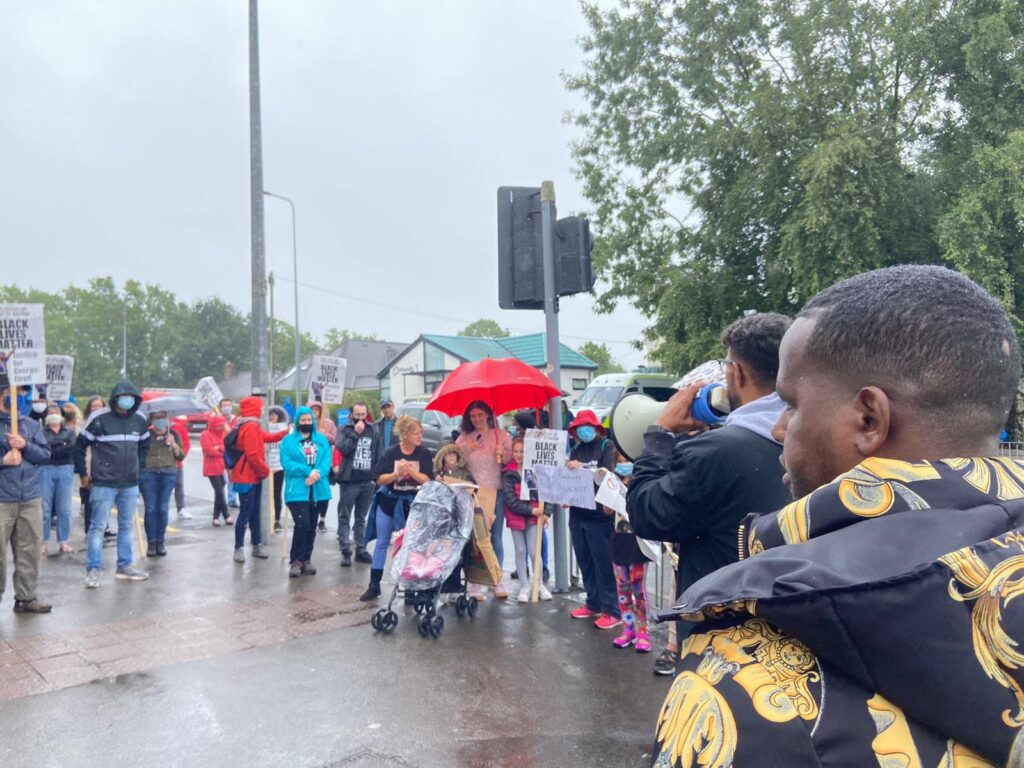
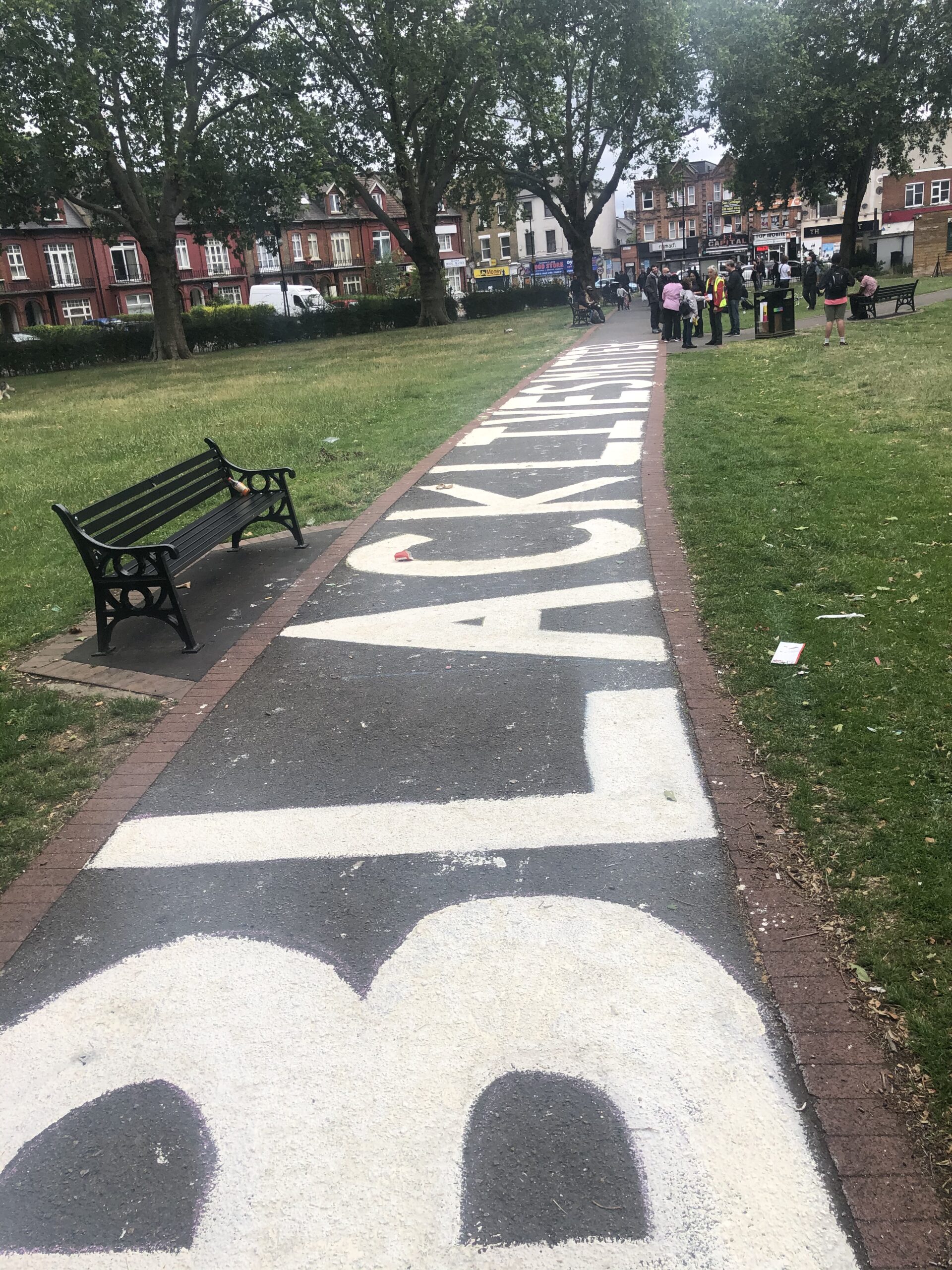
Picket Labour Party NEC over anti-black racism and in solidarity with BLM – Tuesday 7th July
*Reminder: Raise *your* voices*!
Labour Black Socialist & Allies
‘Black Members Matter!’
In Solidarity & Unity with BLM
Come and join our Labour NEC Picket against Institutional & Systematic Racism in the Labour Party
ARE YOU:
ANGRY about the Lack of Opposition to Anti Black Racism (BAME) in Labour Party & Treatment of Black Members?
FRUSTRATED about the Labour Party’s SILENCE on All forms of Racism including Afriphobia, Islamaphobia?
OUTRAGED about Racism in the leaked Labour Report?
WORRIED about a Whitewash Leaked Report Inquiry?
FURIOUS at Starmer’s Dismissal of the BLM Uprising, their demands and Global Historical Importance.
Root out anti-Black racism in Labour
This is OUR MOMENT to Make Our Voices Heard
AT: LABOUR PARTY NEC EQUALITIES MEETING
Labour HQ 105 Victoria St, Westminster, London SW1E 6QT
ON: Tuesday 7th July 2020
AT: 10 am
#BlackLabourMatterMatter #BlackLivesMatter #RootOutRacismInLabour
In Solidarity & Unity with BLM,
Sophia, Liz and Joyce.
If you are interested:
- Join our Socially Distanced Picket
- Wear Masks
- Bring Banners, Flags.
For more info contact Joyce Reid: Jasjr272001@yahoo.com